17 December 2021

King’s Dzongkha: the Beauty of our Language

His Majesty the King's address to the nation on the National Day is the single most important speech in the country and the most awaited moment of the year. It's the annual Royal Address to the nation that leads the nation to reflect deeply on our values and priorities as a nation and inspires the masses to take bold steps into new frontiers. It is in this moment the King talks straight to the heart of every Bhutanese across the world to remind us of who we are.
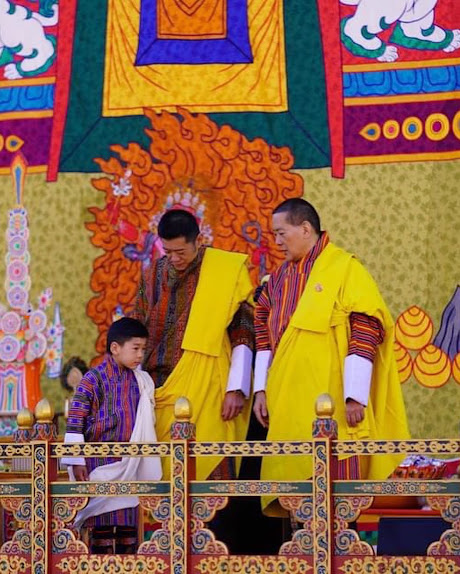

Over the years, we began to seek more in His Majesty's speech. We seek satisfaction from listening to one of the greatest orators of our time. We appreciate the art of public speaking. We marvel at the fluency and the gaps. We admire the power and clarity. 

In those goosebump moments, we savour the true beauty of our Dzongkha language that we are not quite used to. The complexity associated with good Dzongkha is a myth. In the Dzongkha that the King speaks, there is hardly any bombastic word. In King's Dzongkha, we see the elegance in common words, the versatility of simple terms and undeniable dignity. 

If the Dzongkha can be as elegant yet as expressive and simple as the King speaks it, then the generation of Bhutanese who are more into English may embrace Dzongkha. The People who are entrusted with promoting Dzongkha must work hard in simplifying it rather than alienating it from the ordinary people.


Over the years, I have noticed that our language is growing richer by a few words or phrases after every Royal Address. Most of the time, the words are not completely new; rather they are given a new meaning or used in a new context altogether.

This year, during the 114th National Day Address, that word is ངར (Ngar). Like I said, it's not a new word; Ngar means temper in Metallurgy. But for it to be used to define the strength of national character in terms of boldness, rigour, resolve and sternness are metaphorically new and profound. Temper (ངར) defines the degree of hardness and elasticity in a metal; if it's hard, it becomes brittle and breaks off. On the other hand, if it's elastic, it will bend. That perfect balance between the two defines Ngar. And quite poetically, that balance is achieved through heat treatment.


10 December 2021

Why is the place called Hati-Dunga?

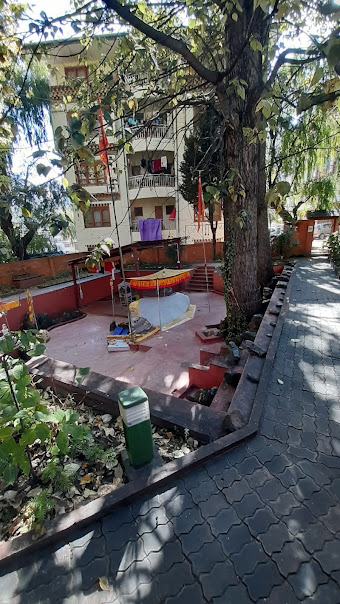
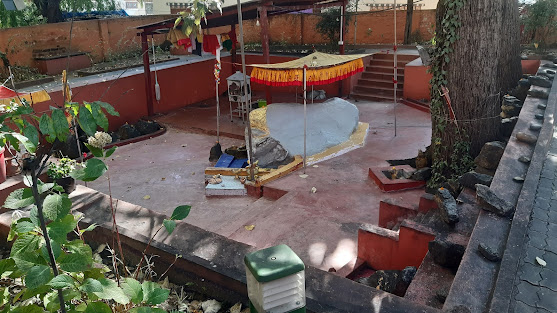
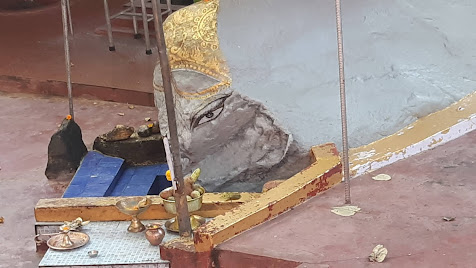
You may have heard a certain place in lower Motithang being referred to as Hati-Dunga (The Elephant Rock) but have you seen it? 


I thought it was just named after a random rock that looked like an elephant 🐘 but it's not. It's named after a more prominent rock and a space around it. It doesn't look so much like an elephant if not for the colour and the eyes drawn over it but it's regarded as a place of worship by the Hindus. It may be associated with Lord Ganesh. 


The place is surprisingly so welcoming. It is developed and managed so well within a campus wall with a gate that's protected with a lock. There is a tiled footpath inside the gate to circumambulate the sacred rock. There seems to be a pujari who makes an offering every day looking at how everything is in order. 

I think the place is already quite popular among the local Hindu devotees, and I believe it can be a hotspot for Indian tourists. 


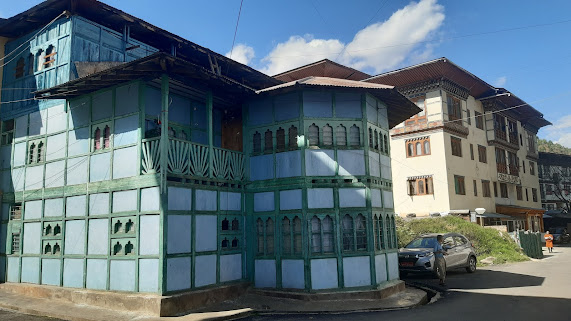
BONUS: A Little further from the sacred rock there is a magnificent blue house that's so characteristic of Southern Bhutan. But I have never seen such a massive and elegant Lhotshampa style house across the entire southern belt, let alone Thimphu. It is a Hati among the southern Bhutanese houses and for it to be next to the Hati Dunga doesn't seem like a coincidence. How are they connected? 


30 November 2021

How to get Blessed at Dechenphug?

Everyone comes to Dechenphug to seek blessing and divine guidance from the mighty Ap Gayney. From ancient times, Bhutanese have been going to him in times of need. There are too many of us. Too many prayers. Too many expectations. Each one is more desperate, more urgent, and more earnest than the other. 


The poor deity there must be overwhelmed. His ears must be ringing with a million prayers, mostly selfish ones. He must be the most confused-deity in the country; Two persons competing for one job slot are both visiting him and seeking his help, whom should he favour? If it was based on merits then why go to him? 


In this mysterious scheme of seeking the attention of the divine one at Dechenphug, I suggest you approach things slightly differently. Make it easy for him to notice you in the maddening crowd; Just help Azha Lhagay, the cleaner, sweep the huge courtyard and the long winding footpath from the parking to the temple. Help him clean the toilet that's hidden behind the lam's residence. Help him uproot weeds from between the stone slabs, this has been bothering him every season. I gave him an idea to pour either bleaching power or used-engine oil between the slabs to prevent weeds from flourishing. 

For a tiny man in his 70s, Azha Lhagay is too thinly spread at Dechenphug. He needs help. Who knows the cleaner may be the divine one. He may have taken the form of the pitiable one just to see if you are kind enough to deserve the blessings you came to seek.

Take toilet paper rolls and soap instead of dalda and incense sticks. Don't do what thousands are already doing. Being the most visited temple, there is Dalda overdose. Do something different to be noticed. 

Thousands come there, but only a few return with blessings. If you want to be among the blessed ones, help do some necessary chores for Ap Gayney. Excite the divine one, impress him and seek his favour. 

Ap Lhagay is the lone cleaner at the temple. He is a grateful person who got this job as a Royal Kidu. He says he can't even offer a spoonful of butter as an offering to Ap #Gayney but he serves by cleaning the home of the divine with all his heart. He says, he would be so grateful if some young visitors could help him with his chores at times. 


26 November 2021

Humans of Thimphu: Chablop Passu

I am capturing this post from Humans of Thimphu page to archive it on my blog and express gratitude. I wish to thank the team of young people behind the project, not just for featuring me but for all the positive stories you have written so far. It’s incredible how a difference in perspective can change everything. Their deliberate effort to find stories of kindness, compassion, courage, devotion, inspiration, dedication... and share on social media that is suffocating with all sorts of negativity reminds me of the story of the Hummingbird


The only other Bhutanese platform on which we see similar expressions of positivity is Ap Pokto, which is deceivingly serious in its commitment to find and tell stories of positivity and go out of its way to help people who are in need. 


Sometimes, some people raise their brows and ask how a particular person is chosen as a silent hero or an inspiring figure by Ap Pokto or Humans of Thimphu when that person doesn’t deserve to be honoured that way. Well, that’s where we must realise that there is goodness in everyone, but only a few of us can unconditionally see through all the flaws and spot the diamond among the coal. Not all of us are kind, loving, and unjudging enough to tell a good story about a random person. Therefore, the two platforms deserve to be celebrated. 

Thank you Humans of Thimphu for choosing to feature my story on World Toilet Day, a cause that's close to my heart. When you wrote a positive story, it's less about the subject and more about you. Thank you for being kind. 


20 October 2021

Tsirang Damphu Swimming Pool

I thought I was ridiculous when Tsirang made news about opening a swimming pool in Damphu to attract tourists. What? Who would want to go all the way to Tsirang for swimming? Which tourists are they talking about?

It only made sense to me when I visited the town myself. My daughter had only one thing on her mind when she reached Tsirang; to visit the swimming pool. October in Tsirang is still warm enough for swimming in cold water- can now count the months the pool is going to serve people. 

There were dozens of local children in the pool, thoroughly excited. Many of them can swim so well, unlike me and my daughter, who never had so much opportunity to learn the art. As a landlocked country with limited access to water bodies, swimming is an art that only a few Bhutanese have mastered.

Therefore, it was big news when Sangay Tenzin made it to Olympics in swimming from Bhutan where the only public pool in Thimphu is not even operational for the last two years. Looking back, we could applaud the school pool in Ugyen Academy for nurturing the swimming dream that ultimately took him to Japan 2020.


Some day, we may hear of a swimmer who began in Damphu pool go on to win an Olympic medal for our country or bravely jump in the river to save someone from drowning. It's not just a perfect getaway for the locals in this warm Dzongkhag, it's a national asset.

As of now, It's one of the only two public pools in the country and the only one that is operational. I happily added it on Google Maps.


19 October 2021

Learning to Cook in School

There is a growing pressure on the education system to prepare children for future jobs that don't even exist today. It's a race between our preparation for the future and the changing landscape of future jobs. The bitter reality is that we can never win this race. Our milestones are often outdated by the time we have achieved them. Are we even in this race? Is it worth it? That's not a great education system. It's a pressure cooker.

The Little MasterChefs


A great education system is one that prepares children for a good life. They should be taught to learn on their own, use kindness as a tool to achieve happiness, and be able to convert stuff in the kitchen to food and feed themselves.

The Chef and Her Happy Father
Let's not even talk about the worst kind of education system where everything revolves around tests, exams and marks. This is where a child is only as heavy as the marks he fetches in the test and exams. Even the school is judged on the exam results of the children. So even the principals are sucking up to the marks-politics as much as the students are.
What My Daughter Served

The above thought played in my head since experiencing a beautiful culture in my daughter's school, Thimphu Pry School. I was invited on the final day of her cooking class to taste the food she prepared. I loved both the food and the fact that her school considered it important to teach her cooking. After a decade in school if our children can't even prepare a cup of tea, what a shame would it be?

Emptying the Plate
Annually, her school playground turns into an open restaurant where the class VI students prepare and serve their parents the foods they have learned to prepare over the last several Saturdays.
For us, it's an emotional moment to watch our little ones walk across the ground with a trayful of food for us. One could see their pride reflected in the eyes of their parents.
Honestly, I didn't expect the food to be good. I was just happy that my 11-year-old daughter managed to prepare a trayful without burning anything. But the MasterChef junior getup wasn't for nothing, it showed both in the beautiful presentation and the great taste.

Their principal shared how some of their past students had surprised their parents with bedtea and helping hands in the kitchen after their cooking classes. I'm looking forward to such surprises but even if it didn't happen I will be as grateful to her school for adding a beautiful dimension to their school experience and giving them the most basic skill to survive as humankind.