Showing posts with label Chablop Passu. Show all posts

22 August 2025

Jinpa Toilet: Because dignity should never have to wait

For the past three years, I have been nurturing an idea close to my heart — the Jinpa Toilet.

Jinpa in our culture means the spiritual act of giving unconditionally to those in need. Just as offering food to the hungry or water to the thirsty is an act of compassion, giving access to a toilet to someone in desperate need is one of the kindest forms of giving. Unlike hunger or thirst, which can sometimes wait, the urgency of finding a toilet cannot be delayed. We all know that desperate, almost unbearable feeling of searching for a toilet in an unfamiliar place.


Now imagine how different life would be if there were public toilets conveniently located and evenly spread across the country. Sadly, we are not there yet. Despite the progress made, public facilities are still scarce, and building new ones takes time, land, and a great deal of money. And again standalone toilets are often unsustainable and, on highways, they can even hurt local businesses by drawing away customers.

This is where the Jinpa Toilet initiative steps in. Until we have enough public facilities everywhere, Jinpa Toilet will fill the gap by asking private businesses to open their toilets to the public as an act of jinpa.

Of course, this giving is unconditional, but we Bhutanese believe in karma. What goes around comes around. By offering their toilet, businesses bring people to their doorsteps. For a business to thrive, it needs people — and a toilet is often the first step in bringing them in, some of whom will choose to spend at their establishment. What may begin as a toilet visit may often turn into a meal, a purchase, or loyal patronage.

If enough businesses in town centers and along highways embrace this idea, Bhutan could have a nationwide network of publicly accessible toilets, created at almost no cost to the government. More importantly, it would be a solidarity movement — a moment where ordinary citizens and businesses come together to solve a national problem in the most Bhutanese way possible.

Here’s how it will work:

  • Businesses with adequate toilets can register as Jinpa Toilets
  • After assessment and approval, we will install a Jinpa Toilet signage so the public knows they can use it freely.
  • All Jinpa Toilets will be mapped digitally and promoted on our platforms, alongside the businesses that host them.

Over time, these Jinpa Toilets will become trusted landmarks, easing the suffering of those in urgent need while also bringing recognition and prosperity to the businesses that practice jinpa.

It is not just about toilets. It is about kindness, dignity, and solidarity. Jinpa Toilet is our way of proving that a simple act of generosity can solve one of the most basic human problems.


21 March 2025

Chablop: A Title, Blessing and Message

 At the 2016 World Toilet Summit in East Malaysia, heads of toilet associations of different countries took to the stage and shared great stories about their works and achievements. The scale of their work and the technologies they used were incredible, but one tragic twist in all their stories was the lack of support from the leadership of their countries. They were yet to convince their leaders of the significance of what they were doing. They were fighting to get their leaders’ attention to their cause.

I was to speak in the afternoon of the second day of the summit. By then, people had heard enough toilet stories to have any more appetite, let alone from an underdog of a small country. Attending the summit for the first time, the afternoon slot was the best I could get, which was seemingly the time when the hall gradually became empty.

I projected the photograph of His Majesty the King and me, which mirrored on some seven giant screens across the gigantic hall, and told them stories of how I have the blessings of my King in what I do. When I told them that His Majesty the King not only recognized my work but also bestowed upon me a new title of Toilet Teacher, I heard the loudest round of applause in that hall that boring afternoon. That made me the only country representative at the summit who, with a little guilt of having to contradict the rest in the house, spoke proudly about having the support of the King of his country.

The crowd wouldn’t be able to comprehend if I told them that the very idea of such initiatives was inspired by the King himself, who in his national addresses subtly sowed the seeds in the minds of his people.

In 2015, during the Royal Bhutan Flower Exhibition in Paro, His Majesty said, “Where we live must be clean, safe, organized, and beautiful, for national pride, national integrity, and for our bright future. This too is nation-building.” I was then experimenting with Bhutan Toilet Org as an online campaign, and that royal message seemed to me like a personal command. I immediately began working on making toilets across the country ‘clean, safe, organized, and beautiful,’ and that was the turning point.

When His Majesty summoned me during the 2016 Paro Tshechu, where I was managing the public toilet along with a team of over sixty young people, I was least expecting it. I still have a vivid memory of that auspicious moment. Dasho Zimpon made me wait on the bridge. I was the only person kept on the bridge, and the next person I would see was His Majesty. I could see thousands of people on both ends of the bridge waiting to get a glimpse of His Majesty, and here I was waiting to meet my King face to face.

Then came the moment. I couldn’t look up directly, but I could make out from the approaching radiance that His Majesty had come. I bowed down to pay my respects and froze back to stillness. His Majesty congratulated me on the clean toilet facility we had arranged for the public at the Tshechu ground. For the King to know about the condition of the public toilet at a local festival was enthralling.

I had crossed that bridge a thousand times in my life, but even in my most beautiful dream, I hadn’t seen myself walking with the King and talking about toilets. The bridge seemed too short that day. At the other end of the bridge, His Majesty stopped and shared very personal stories of toilet issues in our country and how things are in other countries. I pledged my commitment and resolve to work for the cause till the end, and it was perhaps then that I truly felt the gravity of the responsibility. With the blessing of the King himself, everything suddenly seemed so possible.

To make this precious moment live with me forever, His Majesty put his left arm around my shoulder and granted a Kupar, with special permission to share it on social media. He knew I would need this to remain motivated each day, to rise above the social stigma, and to influence people to support me. The photograph that was released that evening worked its first magic on my mother, who was, until then, upset at me for leaving my job and going around cleaning public toilets.

Before I could fully absorb the glory of this moment, I heard my name in His Majesty’s address at the closing ceremony of the second flower exhibition at Ugyen Pelri Palace ground. It didn’t feel real until someone pushed me right in front to face His Majesty. In a dream-like state, I could hear His Majesty: “Passang used to be a teacher. He resigned to take up the task of providing clean toilets to people… and I have been thinking of giving him a name… I should call him Chablop.”

For the King to bestow me a name in public carried profound significance. I knew it wasn’t for what I had done but for what I must do. The title was to be attached to my name to remind me each day to work toward truly deserving and honoring it.

Since then, Bhutan Toilet Org has grown into one of the most effective civil society organizations that has started a toilet revolution in the country, as envisioned and guided by His Majesty the King.

And in 2024, after eight years of unwavering service, I finally felt deserving of the title that was bestowed upon me. I officially changed my name to Chablop Passu, embracing not just the honor but also the responsibility that comes with it. His Majesty’s blessing was not only a profound personal gift but also a message to the people of Bhutan—when the King places his trust in someone, it is a call for everyone to show their support.

21 August 2024

Official Announcement: Name Change to Chablop Passu

 I am thrilled to share a milestone moment in my life with all of you. Back in 2016, His Majesty the King graciously bestowed upon me the name Chablop Passu—a name that carries immense meaning, where "Chablop" signifies "the Toilet Teacher." Back then, I had just started Bhutan Toilet Org and had yet to do anything significant to deserve such an honor, but I knew it was His Majesty’s blessing to show me the direction and keep me inspired through this journey. The magic really worked; each time someone called me Chablop, I was reminded of my purpose in life.


But for the past 8 years, I have held on, unsure if I could truly carry the responsibility that comes with such an honor. It was a period of reflection and growth. I wanted to ensure that I lived up to the expectations and truly earned the name I was given.

Now, after years of dedicated work and having achieved much in this field, I feel confident and ready. Today, I am happy to announce that I have officially applied for and successfully changed my name in the census from Passang Tshering to Chablop Passu.

This change is not just about a name but symbolizes a renewed commitment to continue serving our communities with even greater dedication. I am grateful to everyone who has supported and walked with me on this journey, which is anything but easy.

Here’s to new beginnings and continuing our mission together under the name Chablop Passu.

18 November 2022

CSO Contribution to Sanitation in Bhutan

The emergence of Bhutan's own national civil society organization (CSO) in the sanitation sector is a recent development. However, with their volunteers and activities at the grassroots levels, their contributions are significant in raising awareness, civic responsibility and influencing social changes. The decades of government efforts found a complementing partner in civil society to make it complete.

Following are some of the contributions made by the national CSOs in sanitation;

1. Policy Dialogue: CSOs contributed significantly to influencing, lobbying, drafting and reviewing national sanitation policies, guidelines, and roadmap. They are also a major player in creating awareness on sanitation issues and mobilizing volunteers to become a part of the solution. They are also responsible for highlighting the government's efforts and letting people do their part.


2. Proper management of public toilets: many public toilet facilities have become defunct without proper ownership or management. CSO volunteers conducted mass cleaning campaigns to make the facilities usable and handed them over to caretakers.


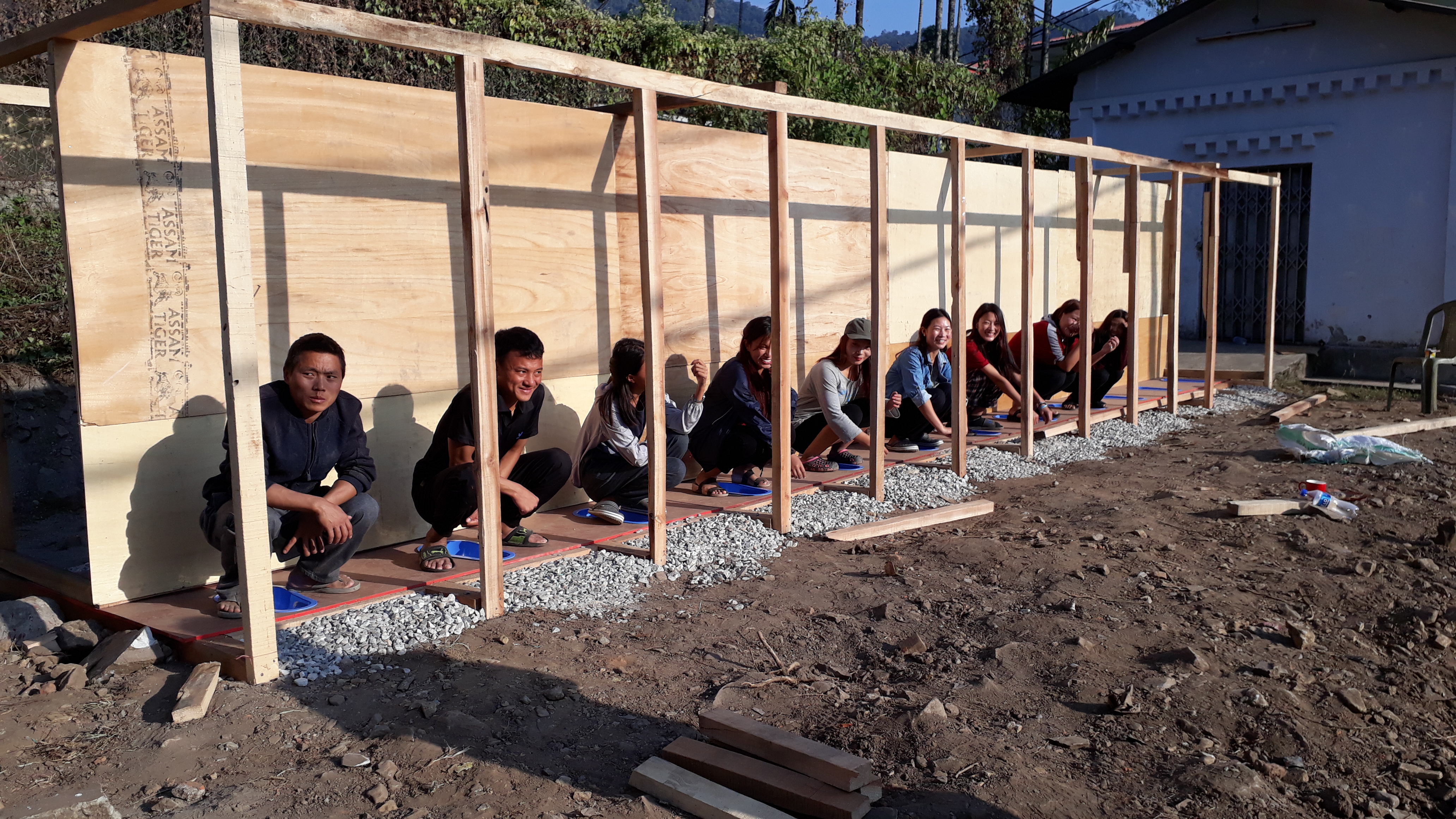
3. School Toilet Upgrade: students were using old toilets that are difficult to clean and maintain hygiene. With students using unsafe and dirty toilets, their behaviours are reflected in the way the Bhutanese perceive toilets. Realizing the influence of school toilets on overall national sanitation, CSO partnered with the Ministry of Education and development partners to upgrade over 2800 units of school toilets using smart methods and technologies. Over 400 school staff are trained to carry out maintenance work. 


4. Monastic School Toilet: to make toilet facilities in the monastic schools clean and safe for the monks and nuns, the old toilets were upgraded using the same method carried out in the schools. The monks are trained to maintain and manage the facilities hence.


5. Toilet for Persons with Disabilities (PwD) and Elderly: For people who cannot go to the toilet or use ordinary toilets due to disabilities, age or sickness, CSOs have taken various initiatives to either make toilets accessible or bring in innovative technologies to put toilets closer to the people. Small portable toilets were introduced as bedside toilets that are made available to people in various forms and models.


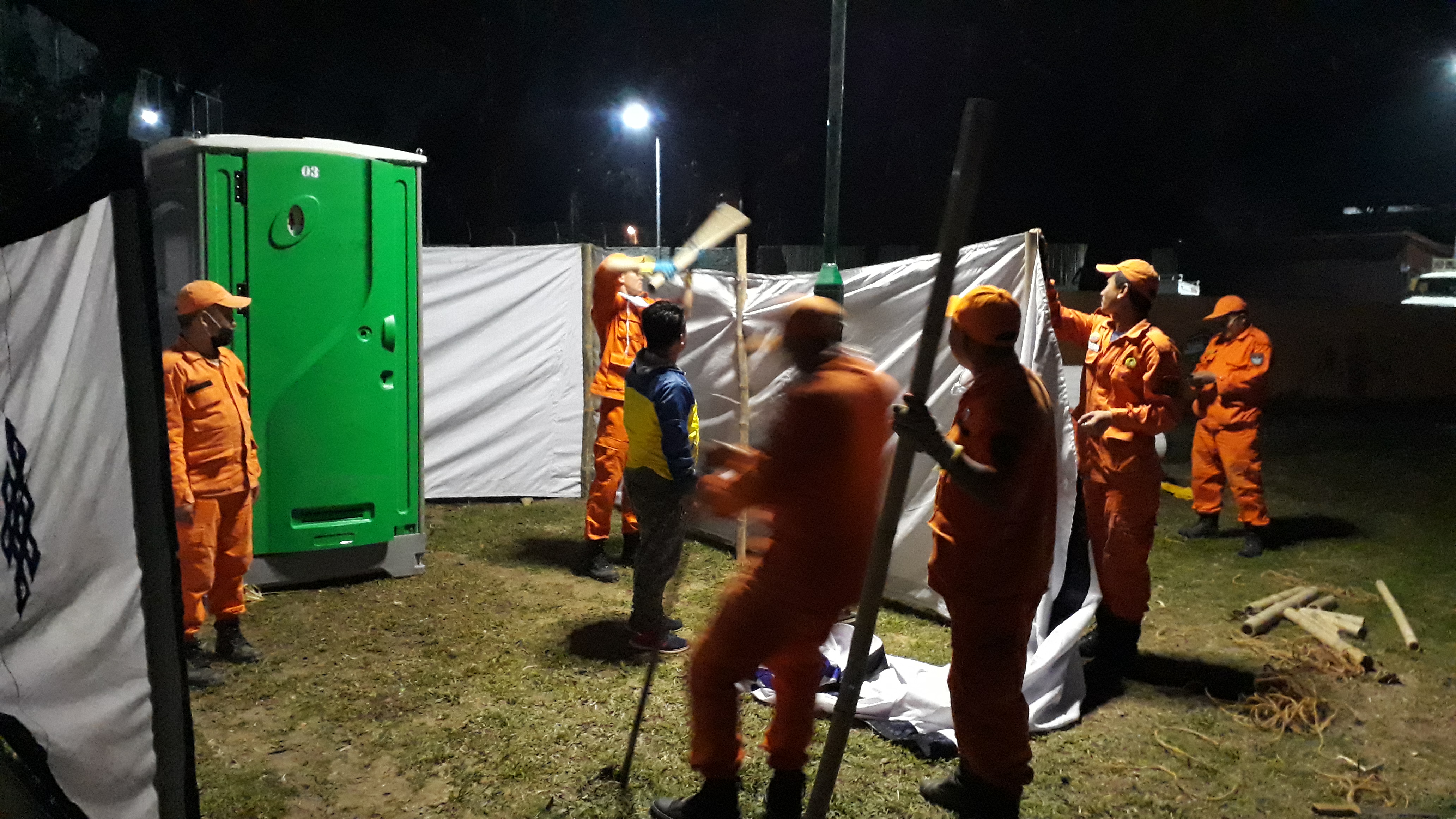
6. Emergency Toilets; During the pandemic, hundreds of duty stations were built along the borders and hundreds more outside the quarantine facilities. CSOs rose to the occasion and helped provide sanitation facilities for duty personnel across the country and for the displaced communities and schools. 


7. Rural Toilets: CSOs have worked with communities that are hard to reach and that are vulnerable to the impacts of climate change in improving their livelihood. Communities are empowered with economically viable activities and provided housing and sanitation that are resilient and in coherence with their environment. About 1000 rural families who could not afford sanitation facilities were supported by various CSOs. On top of that, CSOs have brought in technologies to upgrade hundreds of old rural toilets to speed up government efforts to achieve 100% ODF. 


8. Event Toilet: During events, the venues do not have sufficient toilet facilities. These events usually lead to massive public health issues. But CSOs have developed modern interventions to provide portable toilet facilities and safe temporary toilets to tackle the issue.


9. Professional Toilet Managers: There are no professional sanitation workers. We have been dependent on foreign workers to deal with the dirty job. CSOs have worked to create opportunities for the emergence of local professionals who are proud and skilled in doing the job. Over 200 Bhutanese cleaners are trained to manage toilets professionally. 


Note: The above write-up is a brief note prepared to be included in a national presentation to be made at SaniLearn Workshop in Sri Lanka. It includes the works of CSOs like Bhutan Toilet Org, Tarayana Foundation, Ability Bhutan Society, RSPN, Rotary Club of Thimphu, among others. I am sharing this to celebrate CSO's contributions to sanitation to reserve World Toilet Day.

And as the founder of Bhutan Toilet Org, I would like to thank UNICEF, Save the Children, WHO Bhutan, the Education Ministry, Helvetas Bhutan, the European Union, SARAYA, LIXIL, Dept of Tourism and friends from Japan who supported us in carrying out the above activities. I want to remember all those generous private donors for believing in us. Look how far we have come. Thank you so much. 

Today, we offer our solemn gratitude to His Majesty the King for the vision, direction and handholding from the beginning and throughout. We rededicate our commitment to take it to the end without any compromise.

15 September 2022

The Bhutanese Front-page from April 2016

While looking for something in my trunk, I found this issue of The Bhutanese Newspaper carefully preserved in a folder. My wife says she treasured it. I am grateful to The Bhutanese newspaper for printing this picture, which is the greatest moment in my life, on the front page of the April 2, 2016 issue. It was during the initial years of Bhutan Toilet Org, that we were making feeble attempts to change the state of Bhutanese public toilets. 

This moment that's captured in this picture is significant because it was there His Majesty the King put his hand on my shoulder and blessed me on this long journey to change toilets in the country. It was this picture which convinced my mother that I was on a mission far more significant than her disappointment in my resignation from the government job. 


26 November 2021

Humans of Thimphu: Chablop Passu

I am capturing this post from Humans of Thimphu page to archive it on my blog and express gratitude. I wish to thank the team of young people behind the project, not just for featuring me but for all the positive stories you have written so far. It’s incredible how a difference in perspective can change everything. Their deliberate effort to find stories of kindness, compassion, courage, devotion, inspiration, dedication... and share on social media that is suffocating with all sorts of negativity reminds me of the story of the Hummingbird


The only other Bhutanese platform on which we see similar expressions of positivity is Ap Pokto, which is deceivingly serious in its commitment to find and tell stories of positivity and go out of its way to help people who are in need. 


Sometimes, some people raise their brows and ask how a particular person is chosen as a silent hero or an inspiring figure by Ap Pokto or Humans of Thimphu when that person doesn’t deserve to be honoured that way. Well, that’s where we must realise that there is goodness in everyone, but only a few of us can unconditionally see through all the flaws and spot the diamond among the coal. Not all of us are kind, loving, and unjudging enough to tell a good story about a random person. Therefore, the two platforms deserve to be celebrated. 

Thank you Humans of Thimphu for choosing to feature my story on World Toilet Day, a cause that's close to my heart. When you wrote a positive story, it's less about the subject and more about you. Thank you for being kind. 


23 June 2021

Why are Bhutanese Toilets so dirty? by Chablop Passu

For a country as beautiful as Bhutan, the condition of our toilet is an ugly scar on the face. It begs the question, why are Bhutanese Toilets so dirty? The answer is, we let it be; we tolerate it. We grew up with dirty toilets everywhere, that we built natural tolerance for dirty toilets. So, when we see a dirty toilet, we find it NORMAL. We hardly complain. 


My name is Chablop PaSsu. I am the founder of Bhutan Toilet Organization, and let me tell you that it’s NOT Normal for toilets to be dirty. I beg you to complain when you see a dirty toilet. 


Remember, when we saw a picture of a guy climbing on a chorten, there was a massive outrage in our society (or at least on social media) because it was not normal to climb on a chorten. I wish if people could respond like that when they see a toilet that is left insanely dirty, because even that’s not normal. 


We shape our concept of the toilet based on the kind of toilet we accept as normal.


Concept of Toilet 


Let me redefine the concept of a toilet for you. It is the happiness room that we failed to acknowledge. People go in that room with many forms of discomfort and always come out happy; For example, you badly need to urinate or have an upset tummy. You run looking for a toilet in much pain and fear of humiliation in case you can’t hold it anymore. At that moment, the sight of a toilet brings you a sense of relief. Once you get inside, you experience the ultimate happiness. You are so grateful to the toilet that you are willing to do anything for the toilet. If we could trap on this very emotion and commitment, toilet problems in the country will be solved, but unfortunately, we have a very short memory. 


Every morning, you wake up feeling low; your mouth is stinking, your eyes are sticky, your nose is stuffy, and your hair is messy. You walk into the happiness room, brush your teeth, wash your face, clean your nose, and do your hair, and by the time you come out from there, you are a new person, ready to seize the day. Anyone who goes to the little room comes back a little happier, so isn’t that room magical? Isn’t it the happiness room? 

That is the concept of the toilet that we Bhutanese are unaware of. That’s why it’s not trendy to show off your toilet. We rather invest in a huge sofa, showcase, and TV in the sitting room, while the toilet remains tiny, dingy and stinky with many broken things inside it. Someone once told me that we Bhutanese wear expensive Gho and Keera over torn and faded underwear. We have misplaced our priorities. 


We think a toilet is a dirty little room for us to pee and poop. Even so, of all the rooms in your house, the toilet is the only room that every family member uses at least five times a day. Yet, we invest the least in the toilet. It’s a sad example of a tragedy of the commons.


It's not our fault. It was passed down to us through our genes by our ancestors, who knew little about the toilet. But it will be our fault if we pass down the same stinky legacy to our children despite all the knowledge and exposure. We have come a long way, and much has changed, but we are still stuck with dirty toilets.


Everyone loves a clean toilet, yet collectively, we don't work towards getting it. It’s strange how the whole is less than the sum of its parts.


Attitude & Mindset 


Our attitude toward the toilet is a personal affair as long as we keep it to ourselves, but when we project that in a group or society, it has consequences. It’s worse if you are an important person because it has a significant bearing on your decisions.


Let me share a story of setting up and managing toilets during major national events. You know how important it is to have toilet facilities during big public events. But you don’t know that we get last-minute notice to come and set up toilets, and there is no budget set aside to build toilets. It hurts when the toilet gets the last priority. On the contrary, a five-minute dance program gets two months of preparation, herding and feeding a few dozen heads. Whereas, the toilet that is used by everyone from morning to evening gets the least importance in the whole scheme of things. 


That's just the beginning. The next problem is getting the location for the toilet. Toilets are often given the oddest locations, literally unreachable, perfectly hidden from the view. They would say it’s gross to have a toilet anywhere near. You could see the filthy sight and smell of the toilet right on their face as they explain why we can’t have the toilets in the vicinity. 


I get angry, but I don't blame them. I blame the toilets they have suffered in their schools. They carry such bad memory of toilets that they are worried the toilet we will build will be like the ones in their heads.


If they had a clean toilet in their head, their decision would be different. They would want us to build the toilet next to the gate and the guest tents to be most convenient for everyone.  


I found out that having a profound toilet attitude is critical in leadership. For example, if your school toilet is dirty, it reflects your principal’s ignorance and attitude. If your office toilet is horrible, it has everything to do with your boss’s mentality. He may want his attached toilet to be clean, but you could judge his leadership by the standard of the common office toilet. You do a simple survey and see how it correlates. You will smell it. 


The irony goes much deeper in our society; We are a giving society, yet people will hardly share their toilet. Even a small restaurant toilet will put a “Costumers Only” notice. A rich landlord secretly dumps raw sewer from his property into the stream used for washing and drinking by poorer people downstream. A wealthy household talks proudly about having four toilets inside with no regard for the neighbourhood that has no toilet. 

We forget that the flies from a poor neighbour’s open faeces will not discriminate against the people in the rich household. 


Changing the Concept 


But there is hope. We have seen in short periods we spent around event toilets how people's perceptions change. They visit us at least ten times on the event day (Imagine where would they run to if we didn’t arrange the toilets). The first time they come, they are suspicious. They cover their nose and mouth. When they come out, they look amazed. The next time they come, we see big smiles. And we become friends. The sudden change in their attitude is so satisfying. This is what we work for. This is the sign that we have finally managed to clean the toilet in their head. Next time, we know they will make a decision based on the clean toilet in his head.


The same attitude has influenced the locations of public toilets across the country. How many public toilets are there in Thimphu? There are seven in the core town, but you won't know because most of them are strategically hidden from the public view. It's ironic that the public toilets are hidden from public view, but that's what happens when the engineer or the planner has a horrific toilet in their head. They are only doing a favour to the country by hiding them. AND you know when the toilets are located in the shady corners, all sorts of shady things happen there—fights, drugs, theft, and vandalism. 


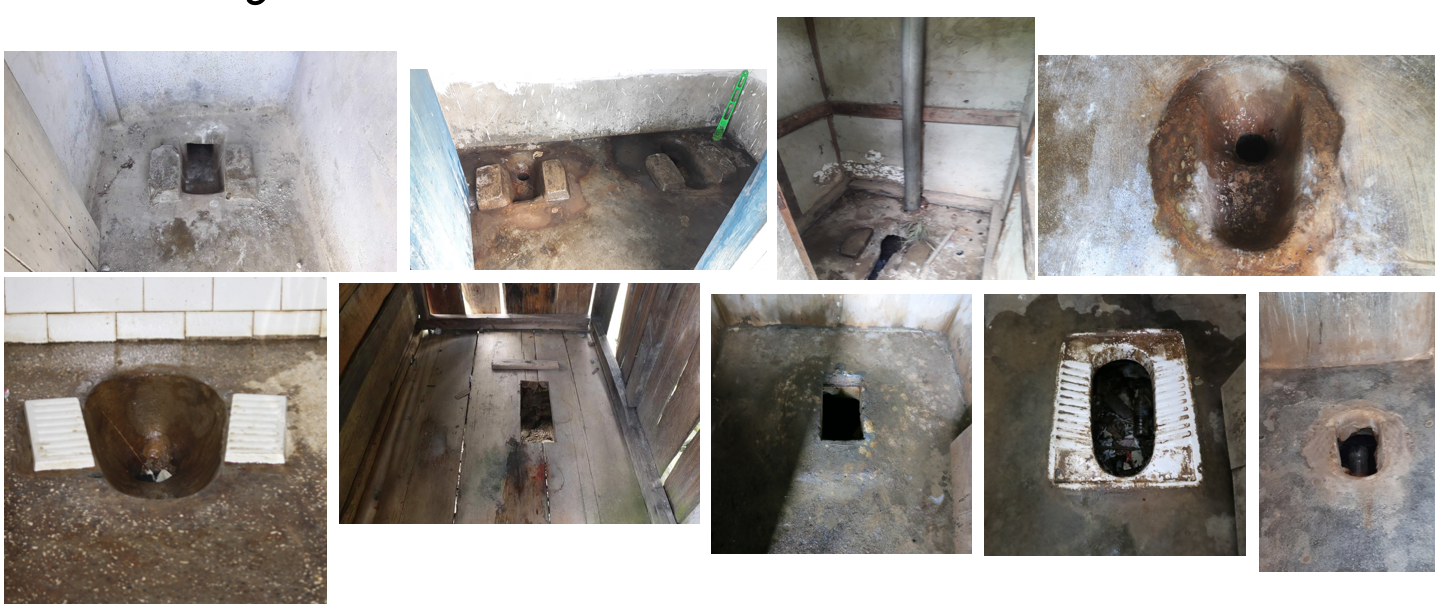
You go to any public toilet and see if everything is in order. I bet you will see that most of them are vandalized, and you will be lucky if at least one flush tank works or you find a proper set of Bucket and Jug to use.


For a harmonious and peaceful country, why do our toilets look like we are in a state of war? The answer lies in the same place, the toilet in our heads. If the planners had clean toilets in their heads, we would have public toilets in good locations, and because of the location, we could avoid all sorts of shady activities, from pooping in the washbasin to stealing buckets jugs and TP rolls.


Personal Etiquettes 


A civilized person will always look for a toilet when they get the call of nature, whereas some of us are still ok with going behind the bush. This habit of going behind the bush is not relevant when you are in a town. That's when you realize how backward you are. But somehow, you manage to find a spot behind a building and shamelessly shit there, knowing that no one will know and no one will even remember. 


For that matter, such a person with no regard for toilet etiquettes will do the same even if he finds a toilet. He will use it without appreciating how good it was when he came in and leave with no regard for people who will go after him. The thought process is the same as the person who did it behind the building. No one has seen it; no one will know, and no one will even remember. 


But let me tell you, what comes out of you is a PART of you. Even though no one saw you leaving without flushing, when people, who come after you see it, they will not like it. They will spit on it in disgust; you are going to feel the hate. No one will look at your shit and appreciate the shape and the colour of it; they will be disgusted. And the energy is powerful. When they spit on the part of you with such sincere disgust, you will feel it no matter where you are. That’s negative energy invoked by you. You bring out the worst in people as long as the part of you remain there.


On the other hand, if you have planted a tree somewhere, every time a person sits in its shade to take rest, the person will feel thankful to the tree, and that powerful and sincere energy of gratefulness will follow you wherever you are like a blessing. Same with a flower you planted that pleases people or a water tap you built that's helping people cool themselves and quench their thirst. What goes around definitely comes around. Let it be the good that goes around.  


Next time you are about to leave the toilet unflushed, remember that ugly little part of you will bother many people and that so many curses will follow you. The idea is simple: even a cat knows. A cat digs a hole, poops in it and covers it up. It's nothing attractive to show to the world, so why don't you cover it up with soil if you are in the wild and make an effort to flush it down if you are in a toilet. Don't make your decision based on whether someone is watching or not. “Integrity is doing the right thing even when no one is watching.” 


The job of Toilet Cleaning


Cleaning toilet is not one of the most attractive jobs in the world. On top of that, in many cultures, it is a job done by a class of people who are considered very low, untouchables. Lucky for us, we never had a deep-rooted toilet culture, and therefore the idea of the job belonging to any class of people is unfounded. Any notion of stigma attached to cleaning toilet is a borrowed mentality. Let’s shed that off. 


Who cleans the toilet at home? Is there a category of people who must do that job? No, it's the job that any family member can do; one who loves cleanliness the most or the one who is good at the art of cleaning, or the one with an open mind to do the job. So, it's not about a class but rather an attitude—a progressive choice. 


It’s in primitive and backward societies that such classes are created and discriminated against. In progressive societies like the US and Australia, toilet cleaning is like any other job. Ask hundreds of respected Bhutanese who have taken the job in Australia by choice.


Of course, the toilets down there cannot be compared to what we have here, and the difference in the kind of money they get down there and what we pay our cleaners here are almost impossible to fathom. This gives us a deep insight into why the western perspective on the job is different from ours. This will help us understand the reality of things and put our money in the right place. If we say toilet cleaners are important members of staff, we must back it up with good money to make it believable. 


Until then, the show must go on. We must work toward uplifting the job to the next level through excellence in performing it and perceiving it. There is no humility greater than the act of cleaning a toilet. 


The Liberator 


And in doing so, when you clean an unflushed toilet, which was causing distress to many people, you act to liberate that unfortunate person who has done that. That person may be having a bad day somewhere. Not knowing what the hell he did wrong to deserve it, but you have shown mercy on him by removing the burden and setting him free. You liberate that person. You become a liberator. 


Not just that, the clean and welcoming toilet that you have created will make every visitor happy, like the tree, flower, water tap I shared about, and the intense, positive energy they emit is the merit you accumulate. It will follow you wherever you are. You will receive their blessings. 


Therefore, sometimes I feel the job of cleaning a toilet is a spiritual offering of humility and compassion, the humility of the self and compassion for others. 


The Royal Vision of a First World Country


During the 113th National Day address, His Majesty the King shared his vision of propelling Bhutan to a first world country during our lifetime. In the last few years, His Majesty kept mentioning Big Data, AI, Block-Chain, Machine Learning, cryptocurrency, and Space science. 


Even if there is nothing we could offer in these big subjects, let us make our individual contribution towards one of the most basic foundations of a first world country- a clean toilet. 


Let’s clean the toilets in our heads and around us. 

Let’s stop going behind the bushes. 

Let’s stop tolerating dirty toilet. 

Let’s complain. 

Let’s prepare to become a first-world citizen. 

29 November 2020

Toilet Management Training - Chablop Passu

Since announcing this training a few days ago about 50 people have signed up, out of which some 20 of them are civil servants in officer's position, which means they are not cleaners. While it's encouraging to see non-cleaners showing interest in the training, we would like to focus the training only on the real cleaners who are employed as cleaners. It doesn't matter whether you are in the private or public sector as long as you are a cleaner. 

A little boy manning a public toilet in Jaigoan

The training will cover the following;

1. Building a positive social identity as cleaners and rise above the stigma.

It's a mind game. We want to tell stories to let the cleaners understand the purpose of their work and walk out of our training with pride and self-respect. Of the many stories, we will definitely share about the Janitor who helped Nasa put a Man on the Moon.

In 1962, During a visit to NASA, President John F. Kennedy noticed a janitor carrying a broom down the hallway. He walked over to the man and said, "Hi, I'm Jack Kennedy. What are you doing?"

"Well, Mr President," the janitor responded, "I'm helping put a man on the moon."

2. Understanding a Clean Toilet and knowing what it takes to achieve that.

Cleaners are generally illiterate and come from the poorer section of the society where they make do with basic or no facilities at all. Their idea of a clean toilet may not be clean enough. They need to see their goals with clarity in order to work toward that. 
Giving a short course to Memorial Chorten Toilet Manager 


The venue will be in a good hotel where we could do a practical session in their toilets, and where we could show good examples of toilets to the participants. The two days at the hotel they must see how consistently the toilets are kept well by the hotel staff. 

3. Using the right tools and gears for safety and Dignity 

Using the right tools and gears can not only ensure safety but also make the work really easy and stylish. If we are going to change people's perspectives on cleaning job we must begin with this; a cleaner in a clean uniform with boots and gloves and holding a good mop will give an impression of a passionate worker who knows his job well. It adds dignity to the job. 

4. Basic skilling in plumbing, carpentry, electrical and masonry will be given to skill-up the cleaners to enable them to carry out timely maintenance. If we observe carefully, all big damages start small and gradually. One nail on time can save a toilet from falling apart. But often in the absence of basic skills and accountability, even the most manageable damages are kept aside for the annual maintenance budget. 

5. Use of daily cleaning Checklist to ensure consistency 


By streamlining the job of the cleaners through a daily system of check and balance that will ensure consistency and sustainability. This is effectively used in every organization, including shopping malls in big cities, it's, therefore, high time we introduce it in Bhutan.
-----


Sharing a moment with SJ town toilet manager


If you know someone who needs this training please let them know, and if the person is unable to fill out the form kindly help them. But note that it's only for the cleaners. 


Talking about the overwhelming response we got from general civil servants, some of my friends said it could for the want of a certificate that may be useful while seeking similar jobs in counties like Australia. With no affiliation with any institute in Australia, our certificate, even if we issued one, may not carry any weight at the moment. But, it has opened our eyes to the possibility of a similar arrangement that could help earn revenue for Bhutan Toilet Org from the training course and guarantee employment in the cleaning sector down under. It's a good dream, isn't it?

09 October 2020

Saving Old Toilets in Schools- An Example from Bhutan

The most satisfying among the projects carried out by Bhutan Toilet Org is the School Toilet Upgradation project. We have been able to train hundreds of school staff to help us transform hundreds of toilet overnight. The combination of smart process and amazing SATO technology made the project one of the most cost-efficient projects.  

We have crossed over a thousand toilets in just over eight Dzongkhags making a saving of at least Nu. 13 million for the government. Of course, these many toilets wouldn't have been upgraded if it wasn't for the project that offered get rid of the old toilets and upgrade them to the next generation toilets using SATO pan. 


Punakha

Within the project, another surprise emerged when we learned that some of the really old toilet structures that were waiting to be dismantled got a second lease of life. While working on some 16 units of pit latrine in a school in Thimphu as part of the pilot project, I noticed an old but strong 10 -unit toilet structure that was closed and left unused. Upon inquiry, the school told me that the toilet was closed for decades and they were only waiting for a budget to demolish it and construct a new one. 
Samtse
Honestly, school toilets are hard to come by. There are a hundred other important things to build in school that toilets are the last things to get attention. That's why you will see that it takes tenures of several principals to finally get a new toilet constructed in a school. And when you hear someone say that they are waiting for a budget to build or renovate a toilet, you know they are being a buffalo waiting for the yak. 
Thimphu
I requested the principal to open the old toilet, which was shut so brutally with hundreds of random nails. Once open, I could see it was a pit latrine with cemented floor and the only problem seems to be the pit which was filled with thousand random things. If we could empty the pit then we could install SATO pan over the pit. The school took the challenge to empty the pit by filling it with water and sucking it out using sewer suction truck. When I visited the next time the pit was emptied and ready to be upgraded. It took was a few hours to install SATO pan on each of the ten units and within the next few days, it was ready to serve its second term. 

Calculating the cost, we found out that we managed to save the old toilet in less than Nu.50,000. If the school had to rebuild a 10-units toilet it could cost at least Nu.1.5 million. Therefore, to be able to save Nu. 1.4 million within a few hours was a significant achievement, but the priceless part of this was reviving and adding 10 more units of toilets for the students to use in a few days. 
Chhukha

The same magic was done to a toilet each in Samtse and Saprang, two blocks each in Chhukha, Zhemgang, Haa, Wangdue and Punakha. To Punakha and Sarpang, Education Secretary, Karma Tshering, then the DG, specifically ask us to go there and save the old toilets that he had instructed the school not to touch until we came to upgrade.  

Since then, we have requested the Education Ministry to disallow school to demolish any old school toilets and it's been circulated thus across the country. 

This story of saving old school toilets inexpensively has been shared on various platforms to encourage similar initiatives across the globe. This could not just save millions in the cost of constructions, but also ensure an instant solution to toilet shortage issues and also the quality of toilets in schools.

Punakha


07 August 2017

Toilet for my Mother

My life is all about toilets now. It used to be about blogging once but it took me too far into being the change I was seeking that I could never really come back to full time blogging. If blogging and toilet were two friends I had, 'blogging' would be happy to know that I left him for 'toilet', which is what he wanted. On the contrary, 'toilet' is a jealous guy, he won't let me go back to blogging. He wants all my time and attention for himself.

Having been full time with toilet for more than two years; cleaning, managing, designing, building, lobbying, auditing, campaigning... leaving no shit unturned for the sake of the toilet, one day when Health Minister, Lyonpo Tandin offered Bhutan Toilet Org. to take up a part of project Health Ministry is doing with rural sanitation, I remembered my own village. It's like that carpenter not having a good home. Classic.

Of course, I personally laboured the construction of a modern toilet at home when I was in college and back then mine was among a very few homes in the village with flush toilet attached to the body of the house. But when I look at it now, with my mother aged beyond sixty and her son having become the toilet man, I wonder why I had built it on the ground floor.

Because when we venture into rural toilet project I want people to literally embrace toilet; bring it closer to them and not make it a shabby little room on the ground floor or worse take it far off beyond the kitchen garden. A toilet should be, something I always urge, so close to you that it's the easiest option so that even the oldest member of the family can use it anytime. Remember we too are going to be old someday. At the end, a toilet that is closer will always receive better attention and therefore remain cleaner.

But first I must have it myself in my own village home before I can even think of talking about it. It's about credibility and self-confidence; for people to have trust in my work, and more importantly for me to have trust in myself to take the leap without an ounce of guilt. After all these years I don't want to be another someone who preaches from a book for the sake of a project.

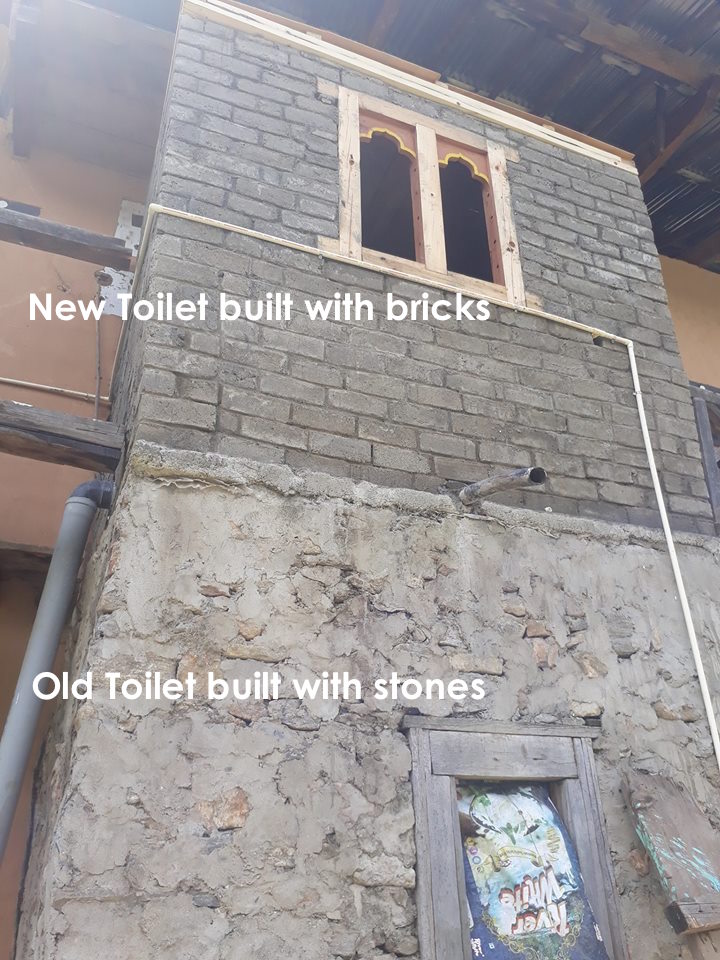
Therefore, this summer break all my siblings came together to gift our mother a toilet that is attached to the first-floor of the house and has all the modern features. Our earlier experience with the stone wall wasn't good; it gave us bulky and ugly walls, therefore, we decided to do the new toilet with bricks. My youngest brother, Tenzin Choda went ahead and started producing concrete bricks. By the time we reached he has produced a staggering 700 pieces. It was enough more than enough for a toilet, and two kitchen sinks.


Toilet for my mother

Our neighbours came around to watch us work and were impressed by the ease of working with bricks and beautiful finish we could achieve with it. I hope they will emulate our way of building a toilet and come up with sexy toilets for themselves.

Three brothers with helping hand from two village friends complete the toilet in five days along side two kitchen sink. Labour charge in my village is high but the two helpers worked over time to deserve the wage, probably motivated by our dedication. One motivation for them was to learn plumbing skill from me. Yes!

There were many new skills I acquired in Bhutan Toilet Org. and one among them is plumbing. The two guys had done many toilet works but they said they could never perfectly connect the sewer lines after putting the rubber washers. They would then seal the joints with a load of concrete plaster. Bad idea. It would leak very soon. I showed them the hack of lubricating the washer with soap to get the perfect joint and they were baffled.

Then, I took over the water connection using CPVC pipes, something I love doing. I gave water connection to the new toilet, the old toilet, kitchen on both floors with a system to control the water pressure (elsewhere it's about low pressure but in my village, the water pressure could blow up a brass bibcock.) When we released the water and it came splashing down into the kitchen sink I could see the joy on my mother's face. My plumbing was perfect; not a leak to be found.
The functional Interior. Final touches waiting for another holiday
The vacation was over from my brother Tenzin and I had to get back to the office but there was one last thing to do, to give our toilet a door. It was going to take one day more, so my brother Samtey stayed back to complete it. But as the Chablop it was my privilege to inaugurate the toilet and I did the honour without the door when no one was around.

I could see the pride in my mother's eyes when she showed our neighbours around the new toilet and I could hear remarks like, 'Pa, it's like a tourist hotel!' and my mother would modestly say, 'It's not quite done yet. They are going to put tiles and geyser later.'

God, it took me half my life to give this practical joy to my mother but now I am at peace. Now I am ready to work with Ministry of Health on the rural sanitation project, where I will use my own example to drive the change.